
Digital Minimalism Goes Viral at UVA
By Harrison Snedeker, Blue Ridge Fellow
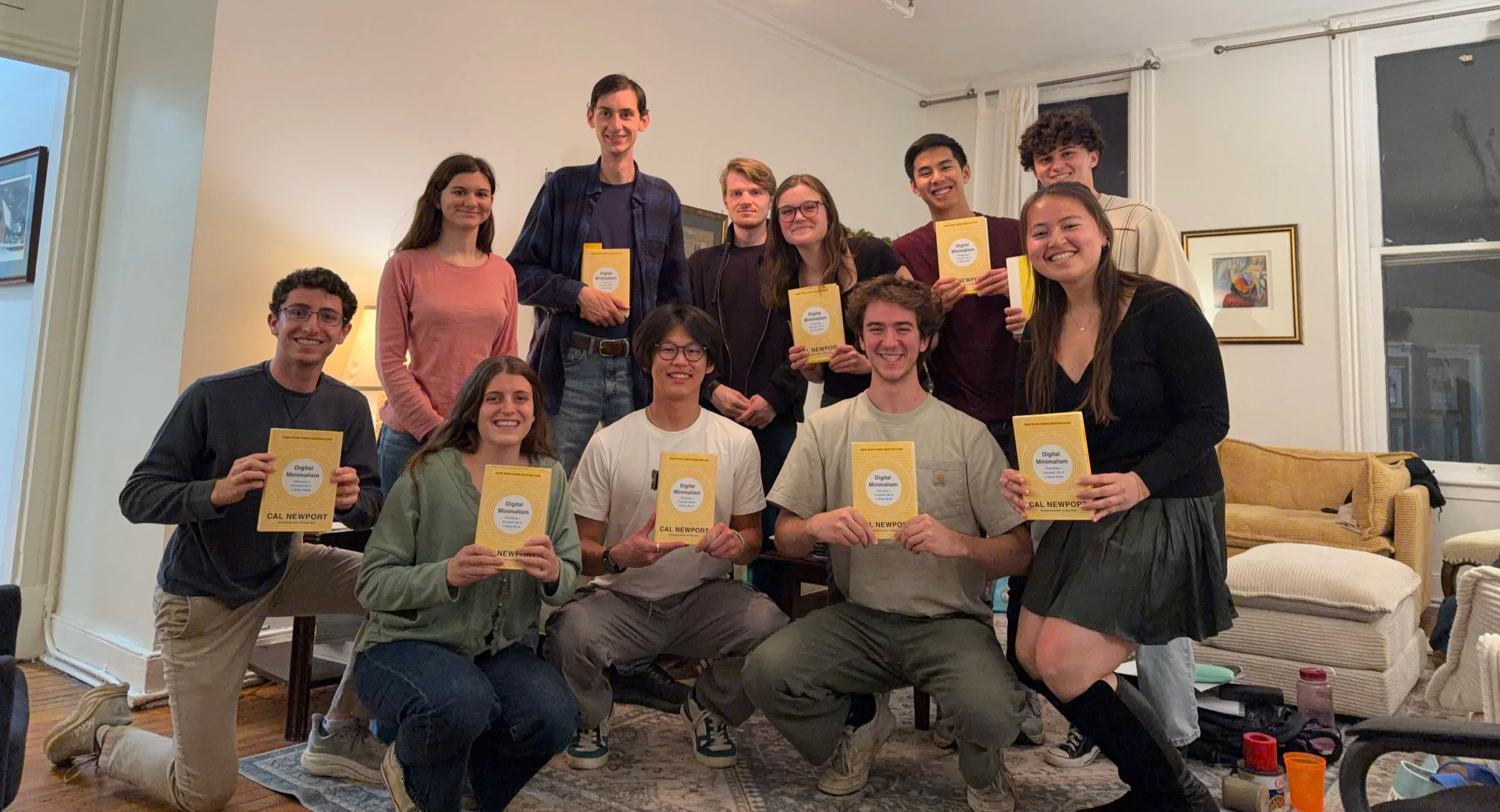
Discovering that far more people than you imagined are interested in something you care about is a strange but encouraging experience. It catches you off guard, in a way, but it also gives you hope. I found that this spring, when I had the pleasure of leading the Digital Minimalism reading and discussion group at the Blue Ridge Center.
When many people hear the term digital minimalism, they think of luddites or off-the-gridders who have written off the use of modern devices in favor of an archaic way of living. This is only one example of digital minimalism, though; at its heart, digital minimalism is a philosophy encouraging intentional and values-based engagement with today’s technologies. A social media manager who spends their professional hours online but chooses to set their phone aside after work because they value spending uninterrupted time with their kids is also embracing the principles of digital minimalism. Digital minimalism is in essence a way of retaining the benefits of digital technology while minimizing the costs, tailored to the individual.
I was initially surprised by the popularity of this reading group, but perhaps I shouldn’t have been. Many people I talk to—especially those of our youngest generations—feel as though they’re losing time to their screens but can’t step away, that they’re stressed out from a barrage of endless online content, and that their ability to function in face-to-face social situations has deteriorated. Those who recognize this and try to step back often find themselves struggling, whether from boredom, fear of missing out, or a societal landscape not oriented towards digital moderation. Although they may believe their situation to be unique, many find themselves asking similar questions whose answers can be traced to the ways in which we interact with technology: Why do I feel like I have so little time? Why does everyone online seem to be doing better than I am? Why does my partner seem so different in person than over text?
Although these questions and experiences are common to so many, there are remarkably few places to discuss them, and fewer still that present actionable and effective steps for improving one’s digital wellbeing. I chose to lead the Digital Minimalism reading group to offer one of these places, and both increased public interest (much of which followed the release of Jonathan Haidt’s The Anxious Generation) and conversations with my peers indicated it was time.
I also chose to lead Digital Minimalism because I’ve walked the path myself, so to speak. Three years ago, I ditched my iPhone for a basic no-frills flip-phone—the kind on which you have to repeatedly tap the number keys to enter a letter when texting—which I use to this day. I don’t use social media except for LinkedIn, but I do use the road atlas I keep in my car. I never “like” or “heart” a message unless it’s specifically requested as an acknowledgement, and much to the horror of some I text with periods. Of course, everyone’s brand of digital minimalism will look different because everyone has different values and tradeoffs they’re willing to make in life, but I’ve found there is much to be gained in learning from the challenges and experiences of others.
Eight weekly meetings allowed our group to discuss a variety of topics in the realm of digital minimalism, from behavioral addictions and social engineering to the societal impacts of digital technologies and strategies for retaining control of one’s time and attention in a digital world. Our conversations explored the ambiguity and limitations of screen-based interaction, the place of digital technology in the classroom and home life, implications of AI for work and relationships, vulnerabilities of the electrical grid and technological overreliance, and much more. These weekly conversations not only explored perspectives on current issues surrounding technology, but provided an in-person face-to-face social opportunity to share and learn from each other’s experiences. As one of our members put it, “Digital Minimalism opened up new perspectives on my generation’s relationship with technology. Even more importantly than the enriching discussion of content, it was incredible to form new friendships here at UVA. I will always look back on this reading group fondly!!” As will I.
I believe the conversations we had in Digital Minimalism need to be had now more than ever, as this group has shown me just how broadly and deeply the impacts of today’s digital tools reach into the lives of my generation, for better and worse. From a scientific standpoint, research literature on these critical topics has only started to emerge meaningfully in recent years, and has barely begun for recent technological developments such as artificial intelligence. Yet the consequences are here now, and their severity and prevalence merit at minimum consideration and discussion. Encouragingly, people are increasingly starting to talk about these issues, taking stock of their digital habits and thinking intentionally about their relationship with technology. I’m pleased to have been able to help cultivate that through our Digital Minimalism group at the Blue Ridge Center; it has without question been among the most meaningful experiences of my time in college.
