
An Evening with Ambassador John Cotton Richmond
By Sidney Seybold, associate director at the Blue Ridge Center
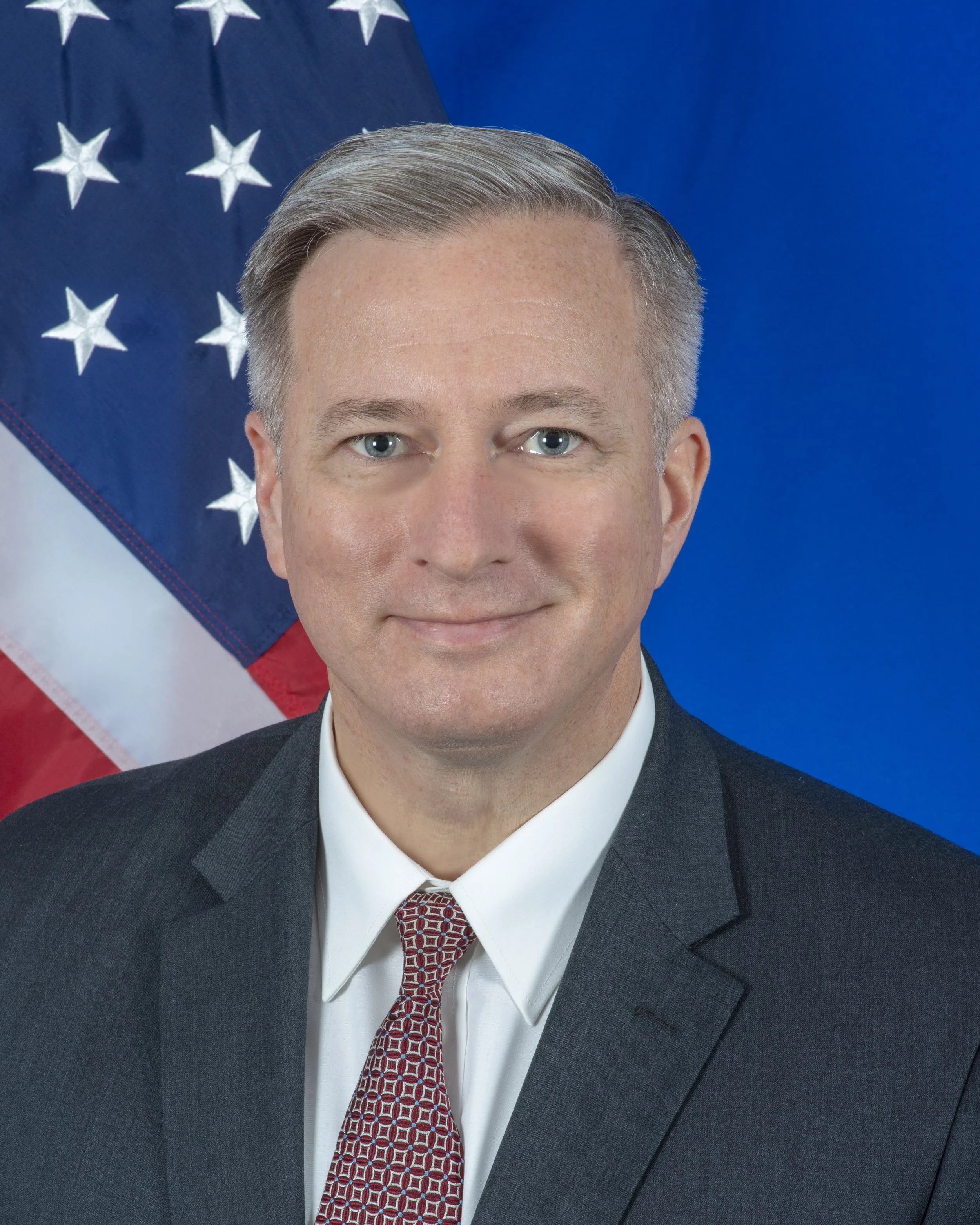
It’s not every day that students have the opportunity to meet an ambassador. John Cotton Richmond, former U.S. Ambassador to Monitor and Combat Trafficking in Persons, joined the Blue Ridge Center to teach students about his life’s work fighting human trafficking, forced labor, and modern slavery.
Ambassador Richmond began by explaining how young the field of anti-trafficking is in the legal world. In 2000, the U.S. passed the Victims of Trafficking and Violence Protection Act, and the UN adopted the UN Protocol to Prevent, Suppress, and Punish Trafficking in Persons. These major pieces of legislation created a comprehensive framework to address the modern forms of human trafficking. Ambassador Richmond said that in the past, advocates had focused mainly on physical bondage but that new technology required new prevention and justice efforts.
The worldwide profits from human trafficking are shockingly high at 236 billion dollars each year. For reference, in 2025 Google earned 132 billion dollars while Apple followed close behind at 117 billion. With the stakes and profits higher than ever, countries and organizations around the world are promoting new solutions to combat this issue. Ambassador Richmond said that while they all have the same goal of ending human trafficking for good, two opposing legal frameworks have emerged. The first proposes to decriminalize prostitution. Its supporters, including Amnesty International and the American Civil Liberties Union, often use the term “sex work” and believe victims will more likely report trafficking abuses and gain access to safeguards from exploitation if they don’t have to fear arrest. Ambassador Richmond subscribes instead to the Nordic model, where governments prosecute the buyers and traffickers but not the victims themselves. He argued that the experiences of victims of trafficking should not simply improve but that trafficking of any form should never be tolerated.
Distressingly, most traffickers, even if convicted, evade punishment. In 2022 in Germany, judges sentenced only 37 percent of convicted traffickers to prison sentences longer than one year. During the Q&A portion of the program, a student asked the reason behind this troubling trend. Ambassador Richmond answered that most victims of human trafficking are the societal outcasts —drug addicts, the homeless, and those who have experienced significant trauma—while traffickers tend to be wealthier, white collar people who get a slap on the wrist. He said a shocking 15 percent of men in the U.S. will pay for sex in their lifetime and insisted that students take action by protecting the vulnerable members of their own communities.
After more thoughtful questions, the program ended, and many students lingered to talk to Ambassador Richmond about how they could get involved in anti-trafficking work. International Justice Mission at UVA, Second Year Council, and the Phi Alpha Delta pre-law fraternity cosponsored this event.
