How to Think About History
By Sidney Seybold, associate director at the Blue Ridge Center
The average UVA student likely does not concern himself much with the National Archives and Records Administration. Many don’t even realize we have our own archive on Grounds at the Albert & Shirley Small Special Collections Library.
Yet, the National Archives is a portal into our nation’s history, culture, and identity, a physical representation of our past, present, and, with the emergence of AI and digitization technology, our future.
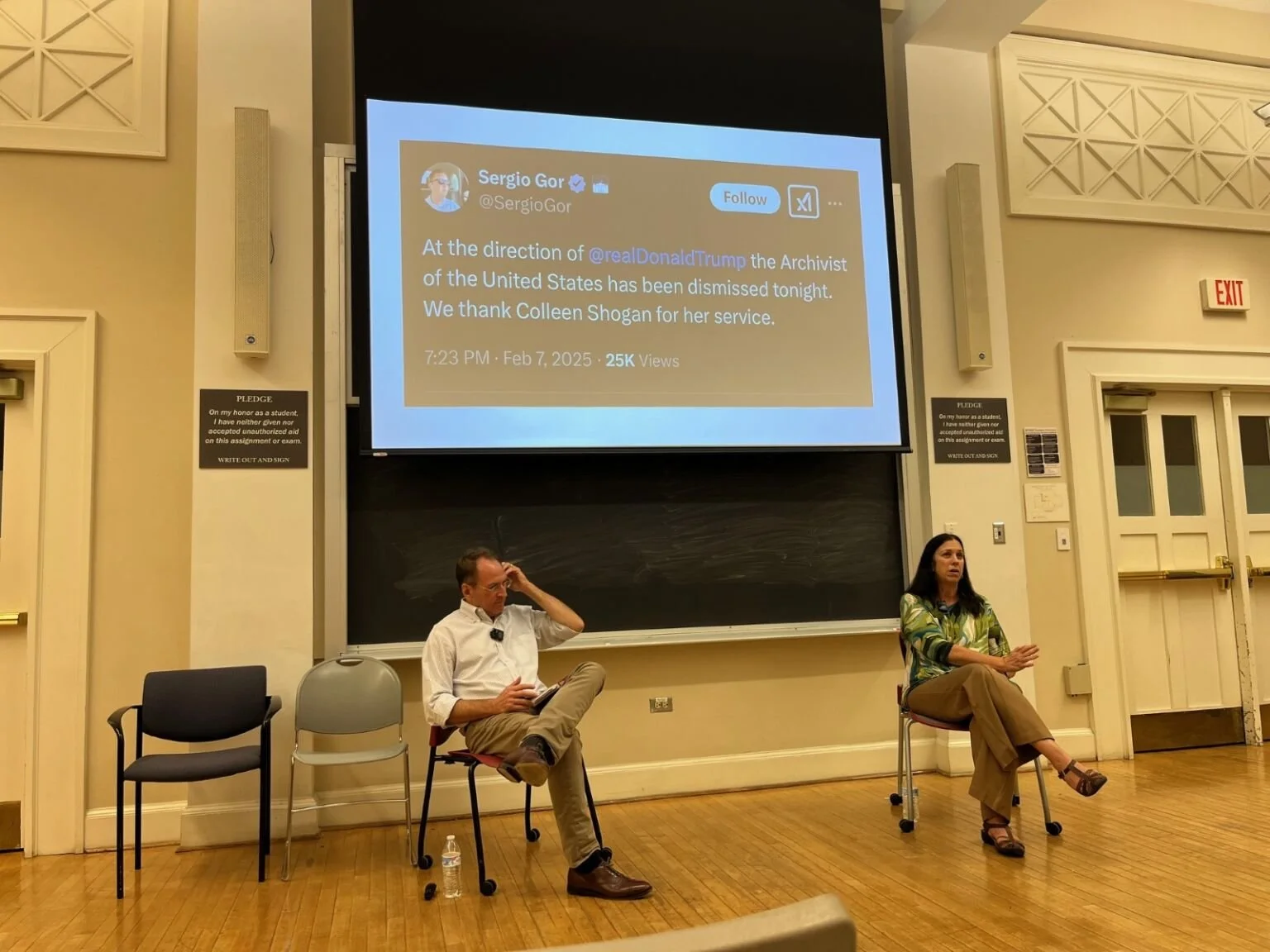
The Blue Ridge Center recently held an event with Colleen Shogan, former archivist of the United States. On the edge of their seats, the audience of budding historians asked insightful questions, including “Did you read the JFK files?” and “Will Jaquelyn Kennedy Onassis’ dress from that fateful day in Dallas ever go on display?” We sought out Shogan because she demonstrates the many career paths history students may take. They don’t have to confine themselves to academia, and they should be ready to lead in the nonprofit and business worlds. Furthermore, they should strive to tell holistic narratives of history, setting aside their personal biases and agendas. Their job is to present and help audiences understand history, not rewrite or change it.
In addition to revealing archival secrets, Shogan recounted her journey from tenure-track professor in her early career to head of the National Archives. She started at George Mason University teaching presidential history. Persistently humble, she insisted her native DMV students knew more about government on the ground than she did. In 2005, Shogan was offered a career-altering position in Senator John Warner’s office and recounted her husband encouraging her to take the job. It might be the only opportunity like it, he argued, and academia wasn’t going anywhere. She recalled a series of similar offers and changes throughout her career and encouraged students to be brave and embrace unexpected career paths and new experiences.
Her work in the Congressional Archives and the White House Historical Association eventually led President Biden to appoint her to lead the National Archives and Records Administration in 2023. Although her tenure was short, she substantially impacted the organization. Shogan shared her trials with students, including defending the Constitution from President Biden’s attempt to add the unratified Equal Rights Amendment and accusations from Democrats and Republicans that she presented history with both white-washed and woke lenses, respectively. “If we start to not follow processes, the strength of constitutional democracy weakens,” she warned students. “If you offend both the right and the left in a nonpartisan position, you’re doing your job well.”
Finally, she advised students to familiarize themselves with AI technology. In our internet age, users produce more content and documents than ever before, far more than humans can manage. To excel in archival and historical fields, they must learn to use digitization software and AI to make research and archival systems more efficient. The archives may represent the past, but students hold the key to successfully bringing them into the future.
Thank you Colleen Shogan and our student audience for an insightful event!